Punjab Expands Liquid Tree Project to Fight Urban Pollution
LAHORE: In a major step towards improving environmental conditions across the province, the Punjab government has announced the expansion of its innovative Liquid Tree project. The initiative is part of a broader strategy to tackle rising pollution levels and promote sustainable, science-based solutions for cleaner cities.
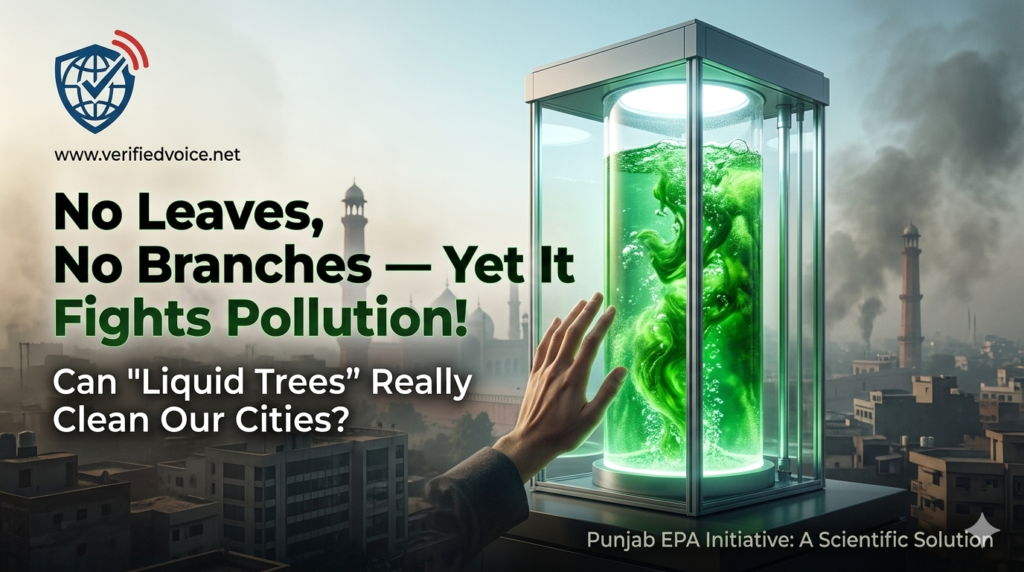
The project is being managed by the Punjab Environmental Protection Agency (EPA). Unlike conventional trees, liquid trees use microalgae technology to absorb carbon dioxide from the atmosphere and help improve air quality, especially in densely populated urban areas where large-scale plantation is difficult.
Punjab Chief Minister Maryam Nawaz stated that Pakistan’s first EPA-certified liquid tree, currently located in Faisalabad, will be relocated to Lahore as part of the expansion plan. She revealed that researchers have collected more than 100 varieties of microalgae from different regions of the country, ranging from Karachi to Khyber Pakhtunkhwa, to support the project.
During the first phase, liquid trees will be installed at major shopping malls, public parks, commercial centers, and other indoor and outdoor locations. The goal is to reduce harmful carbon emissions and provide cleaner air for residents in heavily polluted urban areas.
According to the chief minister, the technology offers a practical and scientific response to the growing challenges of smog and environmental degradation. She emphasized that introducing such modern solutions can significantly contribute to creating healthier and more livable cities.
Officials involved in the project said the initiative reflects Punjab’s commitment to adopting advanced technologies to address environmental issues. They believe the expansion of liquid trees can complement traditional tree plantation efforts while delivering effective results in space-constrained urban environments.
The Punjab EPA has also intensified its environmental enforcement activities in recent months. Earlier this week, authorities demolished 36 illegal fat-melting units, sealed six facilities, and initiated legal action against their owners for violating environmental regulations.
In addition, the agency has accelerated efforts to establish plastic-free zones across major markets. Under new regulations, plastic shopping bags with a thickness below 75 microns will be completely banned.
The EPA is also implementing a comprehensive environmental framework that includes the creation of green buffer zones around industrial areas, mandatory tree plantation campaigns, and stricter controls on deforestation. These measures are aimed at reducing industrial pollution and promoting long-term environmental sustainability across Punjab.
With the expansion of the Liquid Tree project and other green initiatives, the provincial government hopes to create cleaner, healthier, and more environmentally friendly urban spaces for future generations.
Read More:
Punjab expands Liquid Tree project to tackle urban pollution