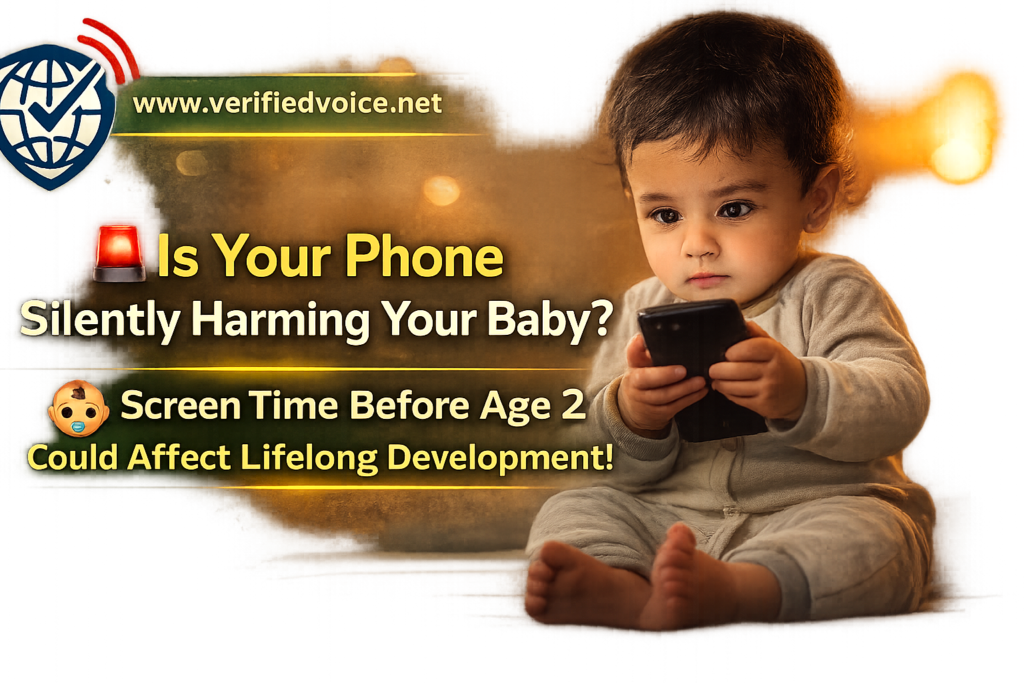
Screen Time for Babies Under Two May Harm Brain Development, Major UK Study Finds
Meta Title: Screen Time for Babies Under 2 May Harm Development, UK Study Warns
Meta Description: A major UK study warns that regular screen time for babies under two may affect brain development, sleep, language skills, eye health, and increase obesity risk.
Screen Time for Babies Under Two Could Have Lasting Health Effects, Researchers Warn
A comprehensive study conducted by researchers in the United Kingdom has raised fresh concerns about the impact of screen time on babies and toddlers. According to the findings, children younger than two years old should avoid regular exposure to smartphones, tablets, televisions, and other digital devices because it may negatively affect their overall development and long-term health.
The research, considered one of the largest reviews on this topic, suggests that excessive screen use during the earliest years of life could interfere with a child’s emotional, physical, and cognitive growth. Experts are now urging governments and healthcare providers to update public guidance and educate parents about the possible risks.
Researchers Highlight a Growing Concern
While much of the global discussion has focused on teenagers and social media use, researchers believe babies have largely been overlooked. They describe this as a “blind spot” in current digital policies, despite screens becoming increasingly common in modern parenting.
The research team says many parents unknowingly introduce digital devices to very young children because clear guidance is often lacking. As a result, infants may begin developing unhealthy relationships with screens before they are even able to speak.
How Screen Time May Affect Babies
According to the study, frequent screen exposure during the first two years of life may reduce valuable interactions between babies and their parents or caregivers. Instead of engaging in face-to-face communication, physical play, and exploration, children may spend more time focused on digital devices.
Researchers also identified several possible health and developmental concerns, including:
- Delayed language and communication skills
- Reduced parent-child bonding
- Less physical activity and outdoor play
- Sleep disturbances and overstimulation
- Increased risk of eye strain and vision problems
- Higher chances of childhood obesity
- Dependence on screens for comfort instead of parental interaction
Experts stress that these early years are critical for brain development, making real-world experiences far more valuable than digital entertainment.
No Proven Cause, But Strong Precaution Recommended
Although the researchers did not find direct proof that screen use alone causes specific developmental disorders, they believe the available evidence is strong enough to recommend avoiding intentional screen time for children under two years of age.
The report explains that babies are already exposed to screens indirectly in daily life, making additional intentional screen use unnecessary and potentially harmful without offering meaningful developmental benefits.
Government Guidance May Need Updating
The researchers have called on the UK government to review its current recommendations regarding screen use for young children.
Existing guidance allows limited shared screen activities if they encourage interaction between parents and children. However, the new report argues that such advice may unintentionally convince parents that screen time is completely safe for infants.
Experts believe clearer recommendations are needed to prevent misunderstandings and reduce unnecessary screen exposure during the most sensitive stage of childhood development.
New Risk Assessment Proposed
The research team, representing four UK universities, has proposed introducing a “baby screen-time risk assessment.” This would help healthcare professionals identify families where excessive screen use may be affecting a child’s development and provide early support when needed.
Researchers also emphasize that parents should receive practical guidance rather than criticism. Many families rely on digital devices without fully understanding their potential effects, making education more important than blame.
Technology Companies Also Share Responsibility
Experts involved in the study say responsibility should not fall entirely on parents. They believe technology companies also have a role to play by avoiding marketing digital content as suitable for babies when scientific evidence does not support such claims.
The report encourages policymakers, healthcare providers, and the technology industry to work together to promote healthier digital habits for families.
Final Thoughts
The latest UK research serves as an important reminder that the first two years of a child’s life are essential for healthy brain and emotional development. While digital technology has become part of everyday life, experts recommend limiting intentional screen exposure for babies and encouraging activities that strengthen family interaction, communication, and physical play.
Parents are advised to spend more time talking, reading, playing, and engaging directly with their children, helping them build strong developmental foundations without relying on screens.
Read More:
Screen time can damage under-twos’ development, landmark UK study warns