How Pakistan Turned the 2025 Conflict Into History
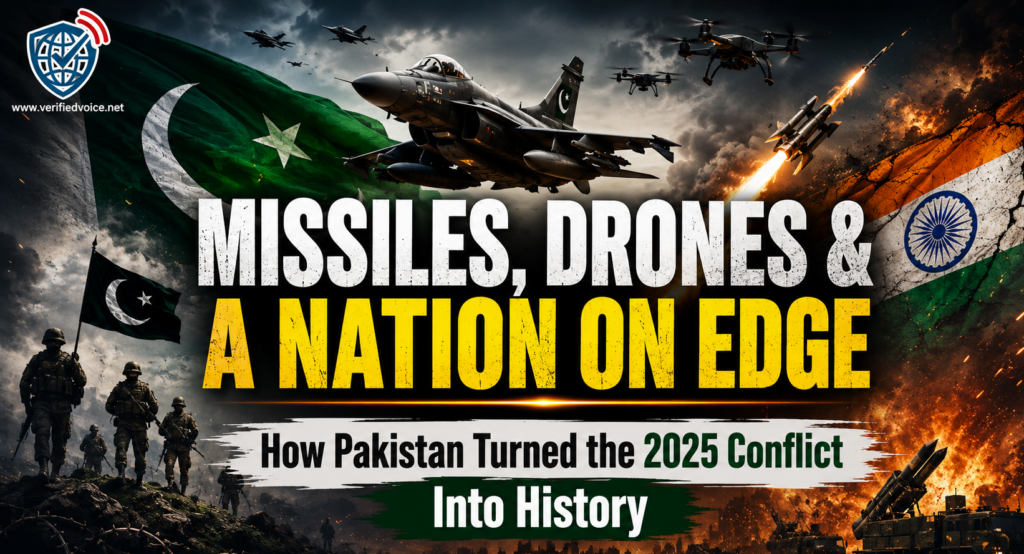
How Operation Bunyanum Marsoos Changed the Region
The brief but intense military confrontation between Pakistan and India in May 2025 became one of the most discussed conflicts in recent South Asian history. The four-day escalation, which began after the Pahalgam incident and ended with a ceasefire on May 10, pushed the two nuclear powers dangerously close to a wider war.
In Pakistan, the military operation was later remembered as “Marka-i-Haq” — the Battle of Truth. The conflict not only dominated headlines across the world but also reshaped regional security discussions, diplomatic relations and modern warfare strategies.
This article revisits the key events from May 6 to May 10, highlighting both the major military developments and the lesser-known moments that influenced the conflict.
Rising Tensions Before the Conflict
The situation between Pakistan and India had already become tense after firing incidents along the Line of Control (LoC) starting from April 26. Both sides increased military preparedness as fears of a larger confrontation grew rapidly.
On May 6, Prime Minister Shehbaz Sharif visited the headquarters of the Inter-Services Intelligence (ISI) in Islamabad along with senior military officials. The visit sent a strong message that Pakistan’s leadership was fully engaged with the developing situation.
Defence Minister Khawaja Asif warned that conflict with India could erupt at any moment, saying the country was fully prepared for any scenario.
May 7: Missile Strikes and Pakistan’s Response
Shortly after midnight on May 7, Pakistan confirmed that India had launched missile strikes on several locations, including Bahawalpur, Muridke, Narowal, Sialkot, Muzaffarabad and Kotli.
According to Pakistani authorities, at least 31 civilians lost their lives while many others were injured during the attacks.
Pakistan responded quickly. Within hours, the Pakistan Air Force (PAF) claimed it had shot down multiple Indian fighter jets, including Rafale aircraft considered among India’s most advanced warplanes.
The aerial confrontation immediately drew international attention. Analysts across the world described the operation as a significant demonstration of modern air combat tactics.
At the same time, the United States stepped in diplomatically to prevent further escalation. Then-US President Donald Trump expressed hope that tensions would cool down quickly.
Pakistan’s National Security Committee also met in Islamabad and authorised the armed forces to take “corresponding actions” in response to Indian aggression.
Meanwhile, global markets reacted strongly to reports that Chinese-made J-10C fighter jets were used by Pakistan during the conflict. Defence-related stocks in China reportedly surged after the developments.
Cyber Warfare and Regional Anxiety
The conflict was not limited to missiles and fighter jets. Both countries also faced growing cyber warfare concerns.
Pakistani authorities claimed they blocked several cyber attacks, while restrictions were imposed on certain Indian digital content and websites.
Air travel across the region also suffered badly. Airlines avoided flying over conflict zones, forcing major route changes and flight delays.
Inside Pakistan, emergency preparations increased. Punjab authorities implemented wartime preparedness measures, while political parties across the country showed unusual unity in support of national security institutions.
India also began emergency drills in several cities, including power blackout exercises in New Delhi.
May 8: Drone Warfare Intensifies
On the second day of major hostilities, Pakistan stated that India deployed Israeli-made Harop drones into Pakistani territory.
Military officials claimed all incoming drones were intercepted successfully.
The conflict expanded beyond northern regions when drone debris reportedly landed near Karachi and border villages in Sindh. One drone incident near Rawalpindi Cricket Stadium caused the death of a civilian vendor during the Pakistan Super League season.
Flights continued facing disruption as airports in both countries experienced cancellations and temporary closures.
Despite the fighting, diplomatic communication continued behind the scenes. The United States increased mediation efforts, with Secretary of State Marco Rubio holding separate conversations with Pakistani and Indian leadership.
Pakistan’s parliament also witnessed a rare moment of political consensus as both government and opposition parties publicly supported the armed forces.
Information War and Media Battle
As military operations intensified, social media became another battleground.
Pakistani officials strongly rejected Indian claims regarding alleged damage to Pakistani fighter jets. Information Minister Attaullah Tarar dismissed several circulating reports as false propaganda.
The conflict also triggered a flood of misinformation online, with both countries attempting to control narratives through television, social media and official briefings.
May 9: LoC Clashes and Diplomatic Pressure
By May 9, drone attacks and shelling along the LoC continued heavily.
Pakistan claimed it had intercepted dozens more drones, while cross-border artillery exchanges caused civilian casualties in border regions.
The worsening security situation forced the Pakistan Cricket Board (PCB) to postpone remaining PSL matches. India also temporarily suspended the Indian Premier League (IPL).
International concern grew rapidly as world powers feared the situation could spiral into a much larger military confrontation between two nuclear states.
Pakistan’s Foreign Office criticised India’s actions as “irresponsible and provocative,” warning that regional peace was under serious threat.
That evening, military spokespersons provided further details regarding Pakistan’s aerial defence operations and repeated demands for evidence concerning the Pahalgam incident allegations.
Behind closed doors, diplomatic backchannel contacts remained active as Washington continued efforts to calm tensions.
May 10: Operation Bunyanum Marsoos
The most dramatic phase of the conflict began early on May 10.
Pakistan stated that India targeted three important Pakistan Air Force bases located in Rawalpindi, Chakwal and Shorkot. Military officials said most missiles were intercepted and strategic assets remained safe.
Pakistan then launched a large-scale retaliatory operation named “Operation Bunyanum Marsoos.”
During the operation, Pakistani forces targeted several military installations inside India and Indian-administered Kashmir. Reports claimed that important defence systems and missile storage facilities were hit during the response.
Indian officials later acknowledged that multiple military sites had suffered damage.
As tensions reached their peak, fears of a wider war increased globally. Reports also emerged about continued cyber attacks and restrictions in airspace operations.
At one stage, discussions regarding Pakistan’s National Command Authority raised international concern over possible nuclear escalation. However, Pakistani officials later clarified that the nuclear option was not being considered.
US Mediation and Ceasefire
With the situation becoming increasingly dangerous, American diplomatic efforts intensified.
US officials remained in continuous contact with leadership in both Islamabad and New Delhi. Finally, on May 10, President Donald Trump announced that Pakistan and India had agreed to an immediate ceasefire.
The ceasefire officially came into effect later that evening, bringing an end to four days of military escalation.
Soon afterward, Pakistan reopened its airspace and commercial flight operations gradually resumed.
A Conflict That Left a Lasting Impact
Although the conflict lasted only a few days, its impact was enormous. The events of May 2025 highlighted how quickly tensions between Pakistan and India can escalate into a serious regional crisis.
The confrontation also demonstrated the growing importance of drone warfare, cyber operations and information battles in modern conflicts.
For many Pakistanis, Operation Bunyanum Marsoos became a symbol of national unity and military preparedness. International observers, meanwhile, viewed the crisis as a reminder of the urgent need for dialogue and stability in South Asia.