Strait of Hormuz Reopens to Commercial Shipping as Middle East Tensions Shift, Oil Prices Fall
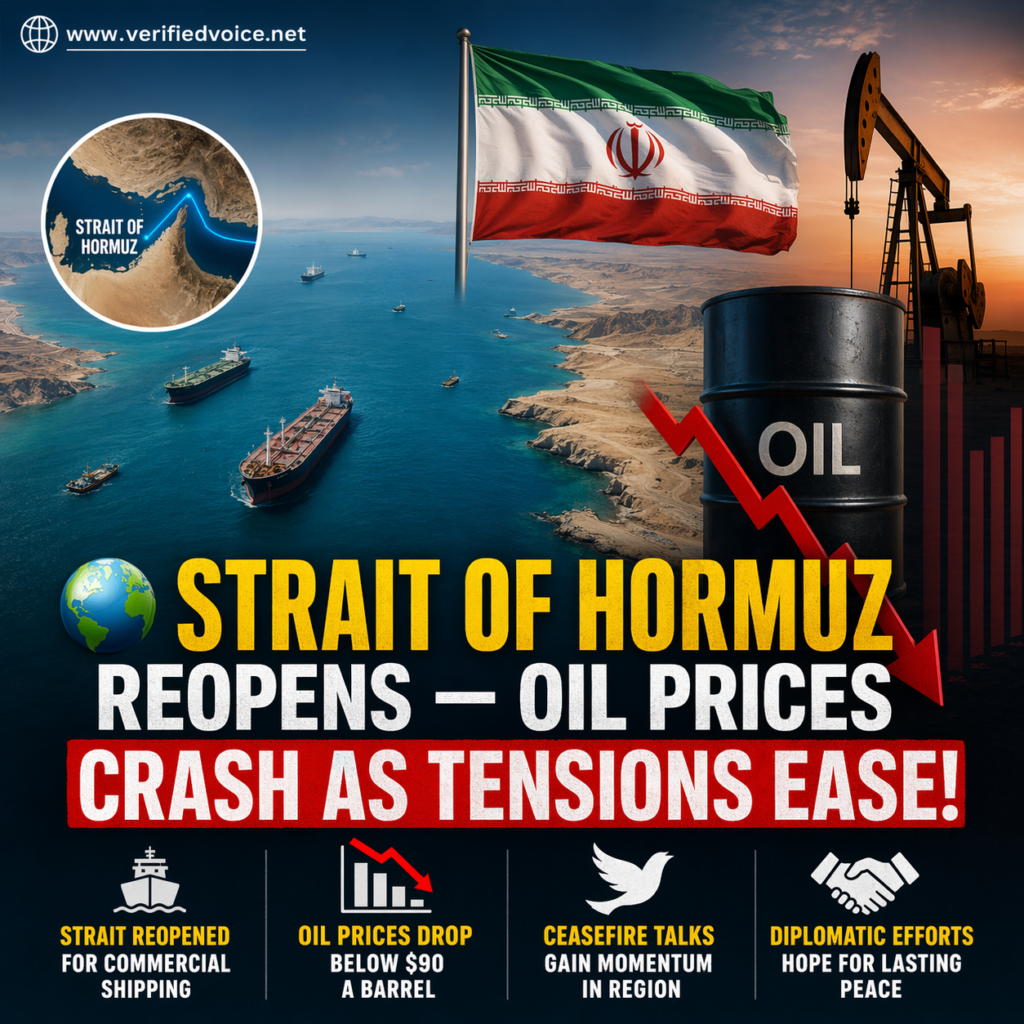
The Strait of Hormuz has been declared open for commercial shipping, according to Iran’s foreign minister Abbas Araghchi, a move that has raised cautious hopes for easing tensions in the Middle East and triggered a drop in global oil prices.
Despite the announcement, experts warn that normal maritime traffic is unlikely to resume immediately through the strategic waterway, which handles a significant share of global oil and gas shipments.
Trump Hails “Historic Breakthrough” Amid Conflicting Claims
Former US President Donald Trump reacted strongly on social media, claiming Iran had agreed never to close the strait again. He described the development as “a great and brilliant day for the world,” while also stating that broader diplomatic progress was being made to end the ongoing conflict.
Trump further alleged that Iran had agreed to suspend its nuclear programme indefinitely and would not gain access to previously frozen assets held by the United States. He also suggested that negotiations for a potential peace agreement could take place within days.
In a separate interview, Trump said the US would assist in handling Iran’s enriched uranium stockpile, referring to it in unusual terms, while Iranian officials have not confirmed any such arrangement and continue to insist on their right to enrich uranium domestically.
Limited Support from Iranian Military Leadership
Although Iran’s foreign minister announced the strait’s reopening, the Islamic Revolutionary Guard Corps offered only cautious backing, highlighting internal differences in Tehran’s power structure during the ongoing conflict.
Iranian state media later clarified that commercial vessels would only be permitted to pass under specific conditions and along designated routes approved by the IRGC Navy.
Fragile Ceasefire in Lebanon Amid Ongoing Violence
The announcement came as a 10-day ceasefire in Lebanon entered its first full day, temporarily easing hostilities between Israel and Hezbollah-backed forces. However, the situation on the ground remains unstable following weeks of airstrikes that have caused heavy civilian casualties.
Shortly after political statements from Washington and Tehran, reports emerged of continued violence, including a drone strike in southern Lebanon that killed at least one person. Israeli officials insisted their military operations in the region could continue if necessary.
Israeli leadership has also publicly signalled that operations against Hezbollah are not yet complete, despite international pressure for de-escalation.
Global Concern Over Shipping Security and Oil Supply
The partial reopening of the Strait of Hormuz has triggered a sharp reaction in global energy markets, with oil prices falling below key thresholds amid uncertainty over long-term stability.
However, shipping companies and international regulators remain cautious. The International Maritime Organization confirmed it is reviewing conditions to ensure freedom of navigation and safe passage for commercial vessels.
A major international meeting in Paris, attended by representatives from around 40 countries, is currently discussing long-term security arrangements for the strait, which previously carried around one-fifth of global oil supplies.
Diplomatic Efforts Intensify Across the Region
Global powers, including the UK and France, have welcomed Iran’s statement but stressed that any reopening must be fully implemented and sustainable. Meanwhile, Pakistan has emerged as a key regional mediator, with its military leadership actively engaged in diplomatic efforts in Tehran.
The United Nations maritime agency has also urged verification of safe passage conditions before a full return to commercial operations.
Human Impact and Regional Fallout
In Lebanon, the ceasefire has led to scenes of cautious celebration, with displaced families returning home despite warnings from authorities. However, large areas remain damaged, and many roads and bridges have been destroyed during months of conflict.
The wider war has had a severe humanitarian toll, with thousands reported dead across Iran, Lebanon, Israel, and neighbouring states since the conflict escalated.