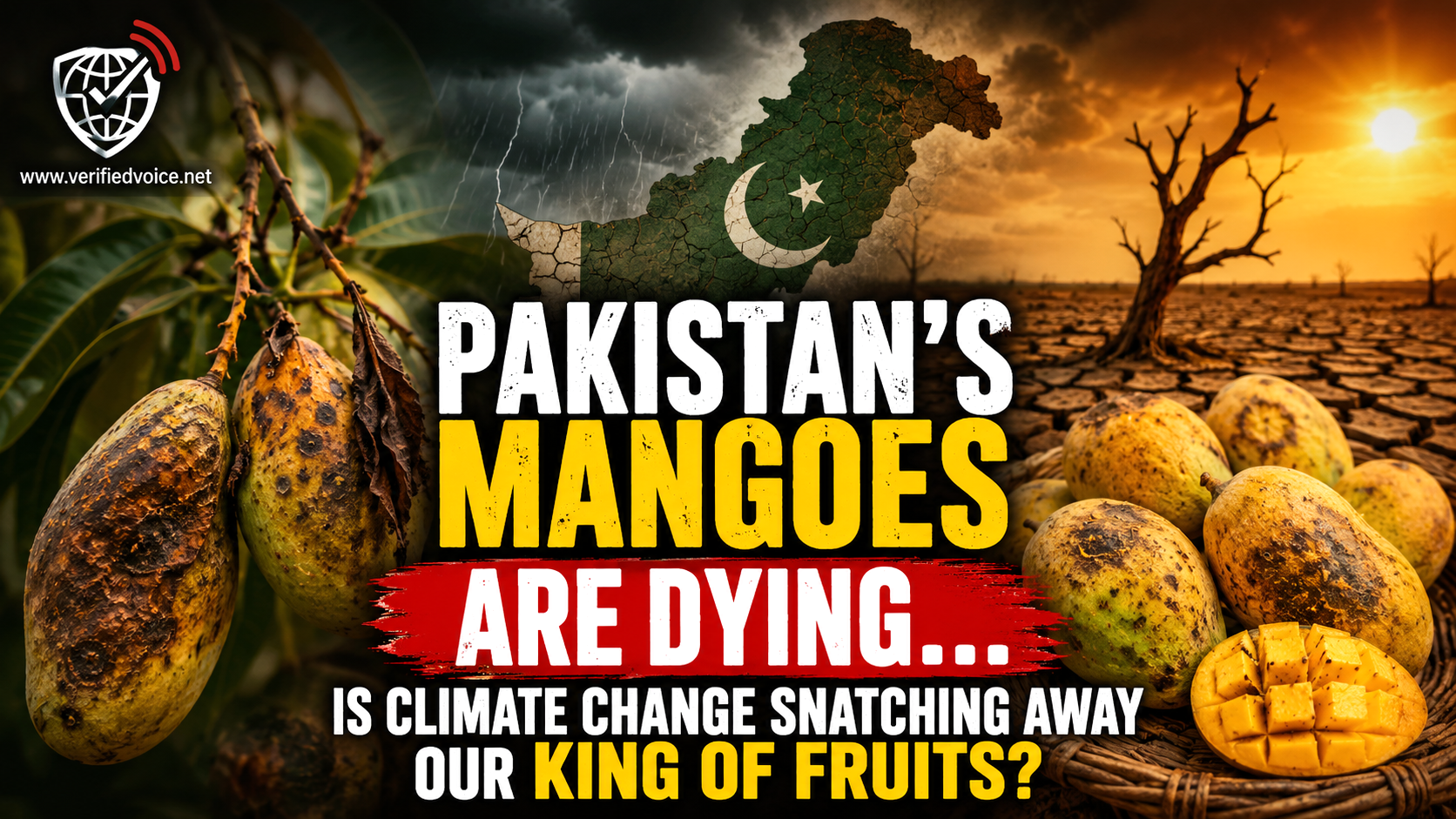
Pakistan’s Mango Crisis Deepens as Climate Change Damages Crops Across Punjab
Extreme Weather and Flood Damage Threaten Pakistan’s Famous Mango Industry
Pakistan’s mango season is usually welcomed with excitement across the country. From roadside stalls to busy fruit markets, sellers prepare for huge demand as popular varieties like Sindhri, Langra, Dusehri, Chaunsa, and Anwar Ratol begin arriving in cities. But this year, behind the colorful displays and sweet aroma, growers are facing serious concerns.
Mango farmers across Punjab say unpredictable weather, rising temperatures, heavy rains, hailstorms, and the after-effects of last year’s floods have badly damaged orchards. Many growers fear that Pakistan’s mango production is entering one of its most difficult periods in recent years.
Mango Orchards Suffer Heavy Losses
The mango-producing regions of South Punjab, including Multan, Bahawalpur, Dera Ghazi Khan, and surrounding districts, have experienced severe climate-related stress this season. Farmers say flowering and fruit development were disturbed by sudden temperature fluctuations during the early months of the year.
Rabia Sultan, a mango grower from Kot Addu, revealed that nearly 40 percent of the crop in her area has been damaged. She grows several mango varieties, including White Chaunsa, Sindhri, Summer Bahisht, and Anwar Ratol, on nearly 100 acres of land.
According to experienced orchard managers, this year’s losses are much worse than previous seasons. Late-ripening mangoes such as Chaunsa and Ratol have suffered the most because they remained exposed to extreme weather conditions for a longer period.
Rising Temperatures Disrupted Flowering Cycle
Experts explain that mango trees require a stable seasonal pattern to produce healthy fruit. Normally, cooler temperatures during February help trees flower properly before the hotter months arrive. However, this year the weather pattern changed unexpectedly.
Punjab witnessed unusually high temperatures in February and March. At the same time, rainfall dropped sharply, leaving orchards dry during a critical growth stage. Scientists initially believed early flowering would increase production, but the excessive heat later reduced pollen quality and disturbed pollination.
Agricultural researchers from the Mango Research Institute in Multan reported that many orchards experienced uneven flowering, premature fruit drop, delayed ripening, and increased pest attacks due to unstable temperatures.
Hailstorms and Rain Further Damaged Fruit Quality
Although temperatures normalized slightly during April and May, random hailstorms, rainfall, and strong winds continued damaging orchards. Farmers say sudden weather changes scarred mango skin and reduced export quality.
Exporters are especially worried because international buyers demand premium-quality fruit. Damaged mangoes lose market value and become difficult to sell abroad.
Growers also fear uncertainty in export markets due to ongoing tensions in the Middle East, including the US-Iran-Israel situation, which could affect trade routes and business confidence.
Floodwater Weakened Mango Trees
Even before the latest heatwaves arrived, mango orchards were already struggling because of the devastating floods of 2025. Thousands of acres in Multan, Shujabad, and Jalalpur remained underwater for long periods, damaging root systems and weakening tree health.
Experts say waterlogged soil reduced oxygen levels and prevented trees from absorbing nutrients properly. Many younger orchards suffered permanent damage, while stressed trees became more vulnerable to insects and fungal diseases.
Farmers are now battling severe pest infestations, especially mango hoppers. Despite repeated pesticide sprays, many orchard owners say they are still unable to control the problem effectively.
Mango Farming Expands but Production Falls
Recent agricultural data shows a worrying trend in Pakistan’s mango sector. While the total cultivated area has increased significantly over the last few years, production per acre is declining.
Punjab’s mango farmland expanded sharply during 2024-25, but average yield dropped considerably. Experts believe climate change is becoming one of the biggest reasons behind falling productivity.
Over the past five years, Punjab has experienced hotter summers, shorter winters, and increasingly unpredictable rainfall patterns. Heatwaves now regularly cross 40°C to 45°C, placing enormous stress on fruit crops.
Small Farmers Face the Biggest Challenge
Agriculture specialists warn that small-scale farmers are the most vulnerable. Nearly 92 percent of mango growers in South Punjab own limited land and often lack modern irrigation systems, climate-resistant farming techniques, and financial resources.
Experts recommend several protective measures, including controlled irrigation, mulching, proper pruning, timely fertilizer use, and improved pest management. However, many growers cannot afford these modern farming methods.
Officials and researchers believe Pakistan urgently needs climate-smart agriculture policies, better forecasting systems, and stronger support for farmers before the situation worsens further.
Is Pakistan’s “King of Fruits” in Danger?
Pakistan’s mango is internationally famous for its sweetness and unique taste. But farmers now fear that climate change could slowly destroy one of the country’s most valuable fruit industries.
Many agricultural experts compare the current situation to the decline of cotton farming in parts of Punjab, where rising temperatures, pests, and unstable weather forced farmers to abandon crops.
If climate pressures continue increasing and adaptation measures remain slow, Pakistan’s mango industry could face long-term decline in the coming years.
READ MORE: