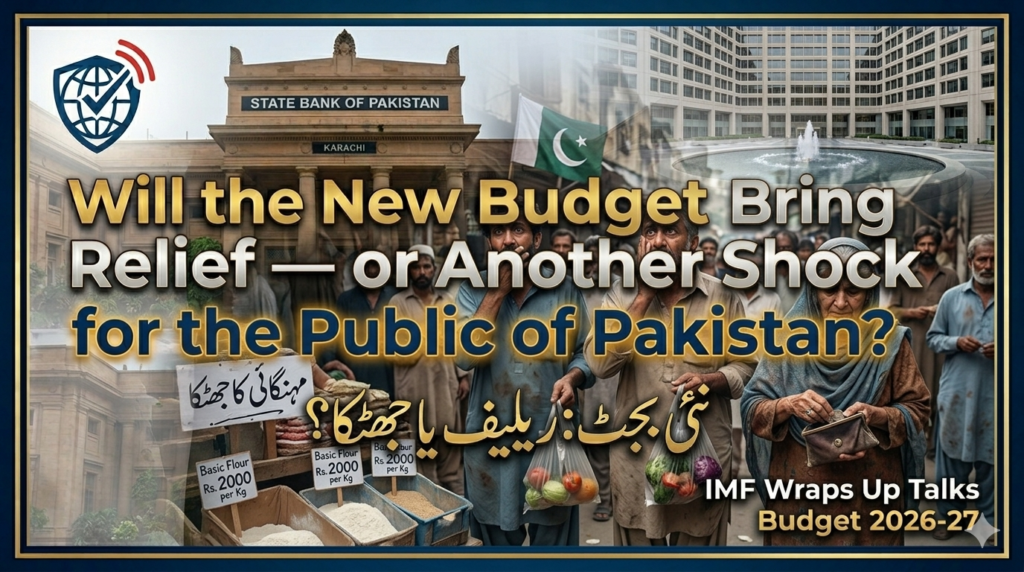
IMF Concludes Pakistan Visit After Key Talks on Reforms and FY2027 Budget
The International Monetary Fund (IMF) has completed its latest visit to Pakistan after holding several rounds of discussions with government officials on economic reforms, fiscal planning, and the country’s upcoming budget for the 2026-27 financial year.
The IMF delegation stayed in Islamabad from May 13 to May 20, where meetings focused on Pakistan’s current economic situation, implementation of reform measures, and progress under IMF-backed financial programmes.
According to the Fund, the discussions mainly revolved around Pakistan’s economic stability, tax reforms, inflation control, and strategies to strengthen the country’s financial system amid regional and global challenges.
IMF and Pakistan Discuss Economic Stability
The IMF mission was led by Iva Petrova, who described the meetings with Pakistani authorities as productive and constructive. She said both sides reviewed the economic impact of recent regional tensions, including the effects of the Middle East conflict, while also discussing the federal budget for FY2027.
Pakistan assured the IMF that it remains committed to maintaining a primary surplus target equal to two percent of the country’s Gross Domestic Product (GDP) during the next fiscal year. Officials believe this step will help improve fiscal discipline and strengthen the economy against future shocks.
The IMF also highlighted the need for gradual fiscal consolidation through broader taxation, improved tax collection systems, and better management of public spending at both federal and provincial levels.
Tax Reforms and Revenue Targets Remain Major Focus
One of the key points discussed during the visit was Pakistan’s revenue generation plan. The IMF has reportedly set a federal revenue target of Rs17.145 trillion for FY2026-27.
Provincial governments have also been urged to increase their revenue contributions by around Rs400 billion. Authorities are expected to improve tax collection from sectors such as agriculture, property, and services to meet IMF expectations.
Economic experts believe these measures could place additional pressure on taxpayers but may also help Pakistan secure long-term financial stability and continued international support.
State Bank Reaffirms Inflation Control Policy
The State Bank of Pakistan (SBP) informed the IMF that it will continue following a tight monetary policy to control inflation and manage rising prices.
The central bank also pledged to closely monitor the economic impact of increasing energy prices and maintain exchange rate flexibility to absorb external shocks more effectively.
According to the IMF, strengthening Pakistan’s foreign exchange market and maintaining a stable currency system remain important priorities moving forward.
Energy Sector and Structural Reforms Under Review
The talks also covered ongoing structural reforms in several sectors, including energy, state-owned enterprises, and financial institutions.
The IMF encouraged Pakistan to continue reforms aimed at improving efficiency, attracting foreign investment, and supporting sustainable economic growth.
Discussions further included climate financing initiatives under the Resilience and Sustainability Facility (RSF), disaster risk management planning, and reforms related to electricity subsidies.
Next IMF Review Expected Later in 2026
At the conclusion of the visit, the IMF appreciated the cooperation shown by both federal and provincial authorities during the negotiations.
The global lender confirmed that another review mission, including Article IV consultations and evaluations of the Extended Fund Facility (EFF) and RSF programmes, is expected in the second half of 2026.
Earlier this month, the IMF approved Pakistan’s latest reform review, allowing the release of nearly $1.1 billion under the Extended Fund Facility and an additional $220 million through the Resilience and Sustainability Facility.
With these latest disbursements, Pakistan has now received approximately $4.8 billion under both IMF programmes combined.
Read More:
IMF Sets 11 New Conditions for Pakistan