

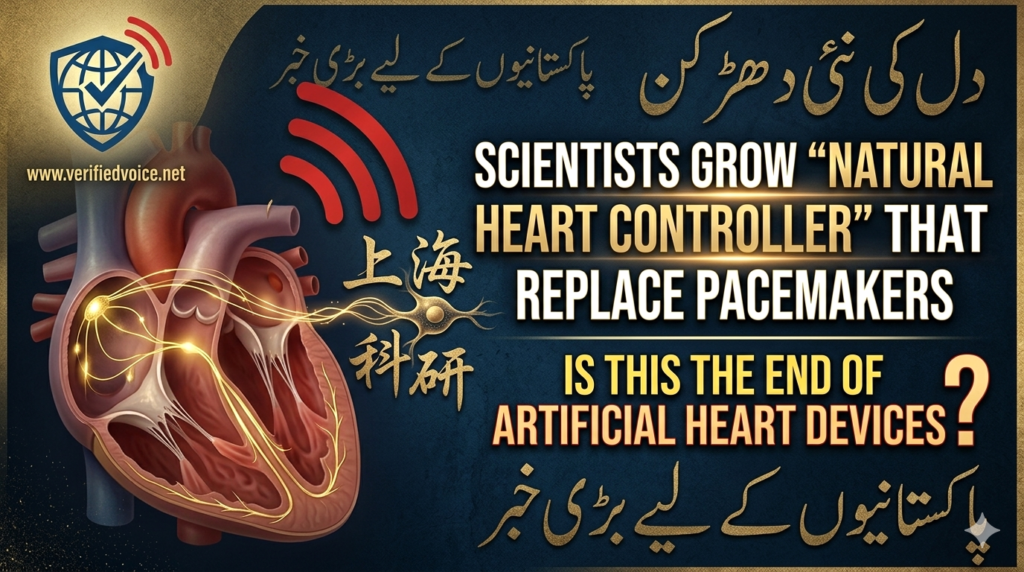
China Scientists Create Biological Pacemaker – Breakthrough Heart “Master Conductor” Could Replace Artificial Devices
Scientists in Shanghai have achieved a major medical breakthrough by developing a lab-grown version of the heart’s natural “master conductor,” a discovery that could one day replace traditional electronic pacemakers and change the treatment of heart rhythm disorders.
Researchers successfully engineered the world’s first laboratory-grown sinoatrial node, the tiny but vital structure responsible for controlling the heartbeat. This natural pacemaker sits in the right atrium of the heart and ensures that electrical signals are generated in a steady rhythm to keep blood pumping efficiently throughout the body.
When this system fails, the heart can slow down dangerously or even stop, leading to life-threatening conditions. To address this, the Shanghai-based scientific team used human pluripotent stem cells—capable of developing into various cell types—to build a 3D biological replica of the sinoatrial node.
In a key advancement, the researchers connected this organoid to a lab-made cardiac nerve network, allowing them to replicate how the nervous system naturally controls heartbeats. The result was a functioning biological pacemaker that generated consistent, spontaneous electrical activity.
The study, published in Cell Stem Cell, shows that the engineered tissue not only beat on its own but also successfully transmitted electrical signals to surrounding heart-like tissues, closely mimicking real human heart function.
Experts say this achievement could open new doors in cardiovascular research, drug testing, and potentially future cell-based therapies for patients suffering from arrhythmia. Unlike electronic pacemakers, which have limitations such as battery life, infection risk, and lack of adaptability, a biological alternative could offer a more natural and long-term solution.
The sinoatrial node has long been difficult to study due to its extremely small size and complex location inside the heart. Traditional animal models often fail to accurately represent human heart function, making this lab-grown version a significant step forward for medical science.
Researchers also observed that the organoid responded to heart-regulating drugs and showed gene activity similar to early human development stages, further proving its biological accuracy.
In recent years, organoid technology has rapidly advanced, with scientists even growing miniature heart-like structures in laboratories. This latest development strengthens the possibility that future treatments may rely on living biological systems instead of mechanical devices.
If successfully developed for clinical use, this innovation could mark a new era in cardiology, where damaged heart rhythm systems are repaired or replaced using living, self-regulating tissue rather than electronic implants.


Pingback: Produce Petrol From Air - VerifiedVoice